Climb the Chess Ladder: ten stages, three tries
The Chess Ladder on Brethreign is ten puzzles that get harder as you climb. Choose a level, guard your three tries and beat your best stage.
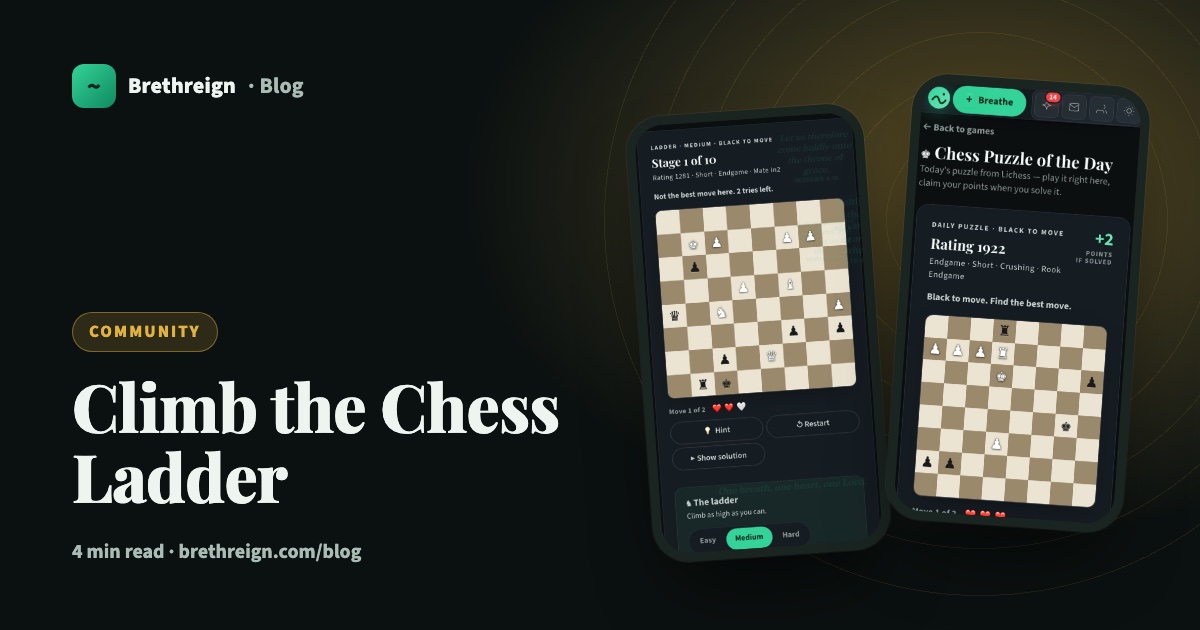
The Chess Ladder is for the days when one puzzle isn’t enough. It’s a climb of ten chess puzzles, each harder than the one before, and the question is simple: how high can you get? This guide explains the rules and shares a few ways to climb higher.
Where to find it
Open /games/chess. The Puzzle of the Day is at the top. Scroll down to the section headed ♞ The ladder, with the line “Climb as high as you can.”
The rules
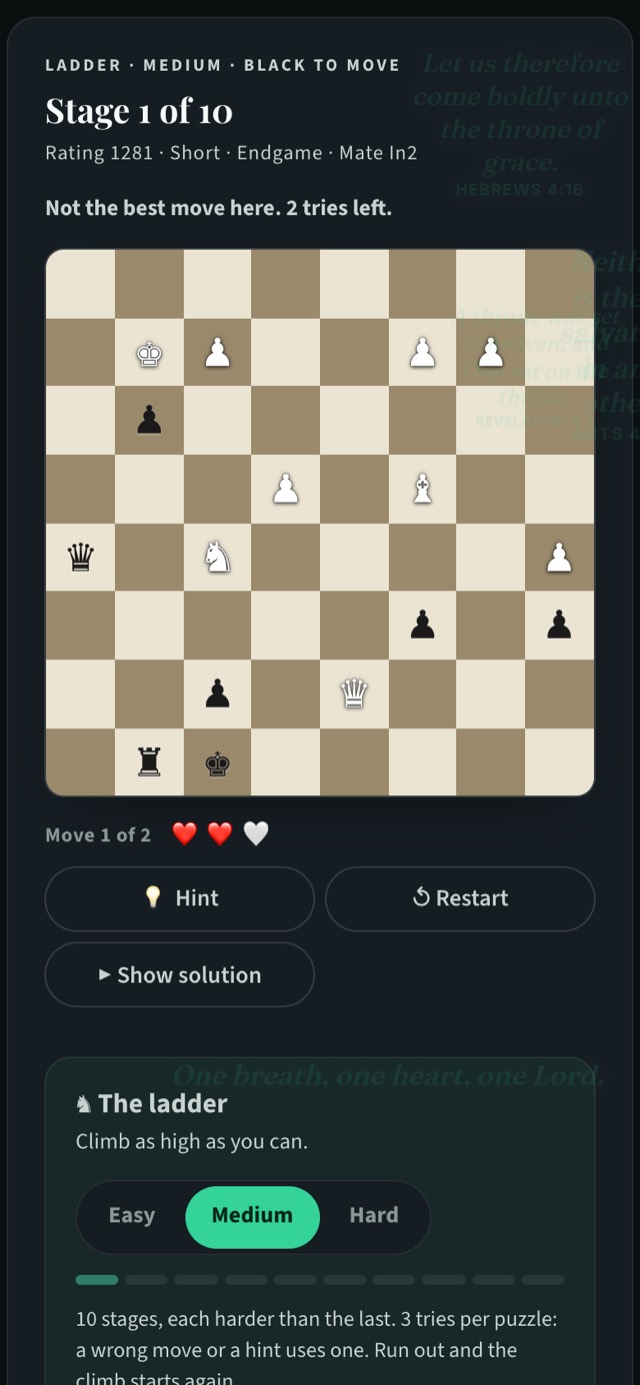
The rules are printed on the page: “10 stages, each harder than the last. 3 tries per puzzle: a wrong move or a hint uses one. Run out and the climb starts again.” Here’s what that means in practice.
- Choose your level. Tap Easy, Medium or Hard. Your climb starts at Stage 1 of 10.
- Solve the puzzle. Read whose move it is and the themes above the board, then play.
- Guard your three tries. Hearts under the board show how many you have left.
- A wrong move costs a try. It’s shown in red and taken back, with a message such as “Not the best move here. 2 tries left.” Then you can think again.
- A hint costs a try too. Use one only when you’re stuck.
- Any checkmate counts. If the puzzle asks for mate and you find a different checkmate from the expected one, it still counts.
- Solve it and tap Next. You move up a stage.
- Run out of tries and the climb starts again from Stage 1.
Your best stage is remembered
When a climb ends, it isn’t wasted. Brethreign keeps your best stage, so you always know the height to beat next time.
The ladder doesn’t add to your leaderboard points. That’s on purpose. It’s a place to practise freely, take risks and learn, without worrying about your weekly score. Points come from the Puzzle of the Day.
Which level to choose
- Easy is for newer players and anyone warming up.
- Medium is for players who know the common patterns, such as forks, pins and simple mates.
- Hard is for experienced players who want a real test.
A good plan is to start on Easy. When you reach Stage 10 there, move up a level.
How to climb higher
Slow down on the first move. Most lost tries come from playing the first move that looks good. Count every check, capture and threat before you touch a piece.
Think about the reply. After your move, what will your opponent do? Puzzles are built around a strong answer to the obvious move.
Save your hints for the top stages. A hint costs the same as a wrong move. On Stage 2 it’s rarely worth it. On Stage 9 it might be.
Learn from a lost climb. When you run out of tries, look at the position again. The idea you missed will turn up in another puzzle.
Patience pays
The ladder rewards patience more than speed. There’s something in that for life too: steady steps, learning from the falls, and getting back up.
“Let us run with patience the race that is set before us.” (Hebrews 12:1)
Keep going
Read next
 Community
Praying together on Brethreign
How to ask for prayer on Brethreign, even anonymously, how to pray for others, and how Prayer Circles keep small groups praying together.
 Community
Games on Brethreign: Bible Quiz, the Chess Ladder and more
A tour of every game on Brethreign, from the Bible Quiz and Chess Ladder to Verse Memory, plus how scores and the weekly leaderboard work.
 Community
How to play the Bible Quiz on Brethreign
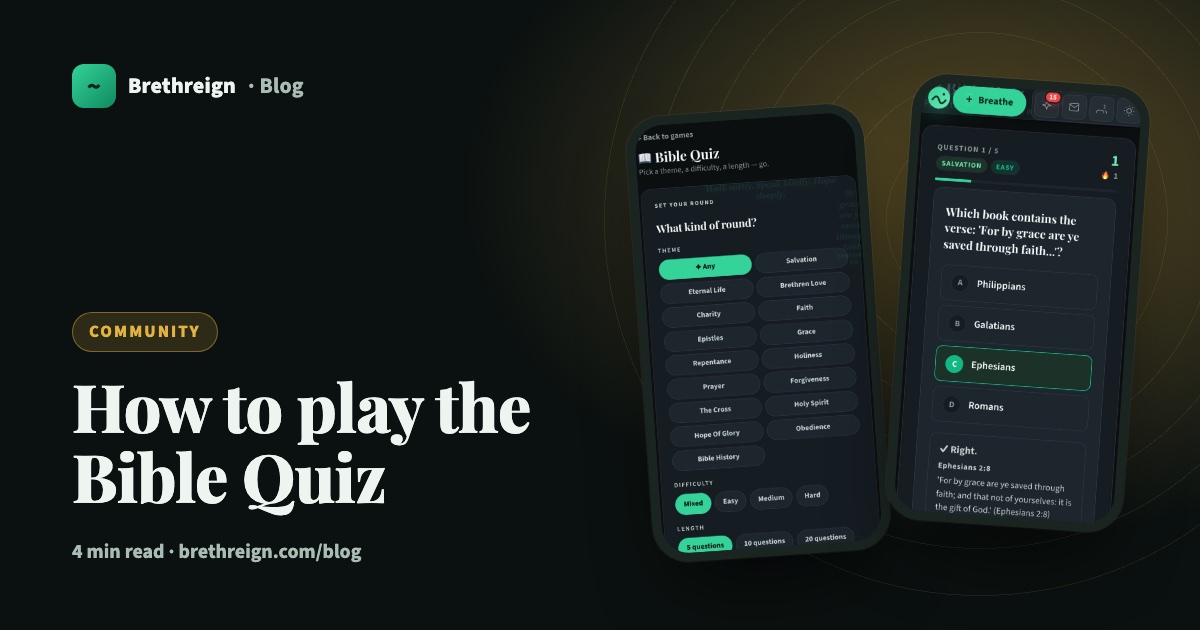
Set up a Bible Quiz round your way: pick from 16 themes, a difficulty and a length, then learn from every answer with references and short notes.
Join Brethreign, free
A safe online home for Christians: breathe, pray, read, chat, and grow in your work.